
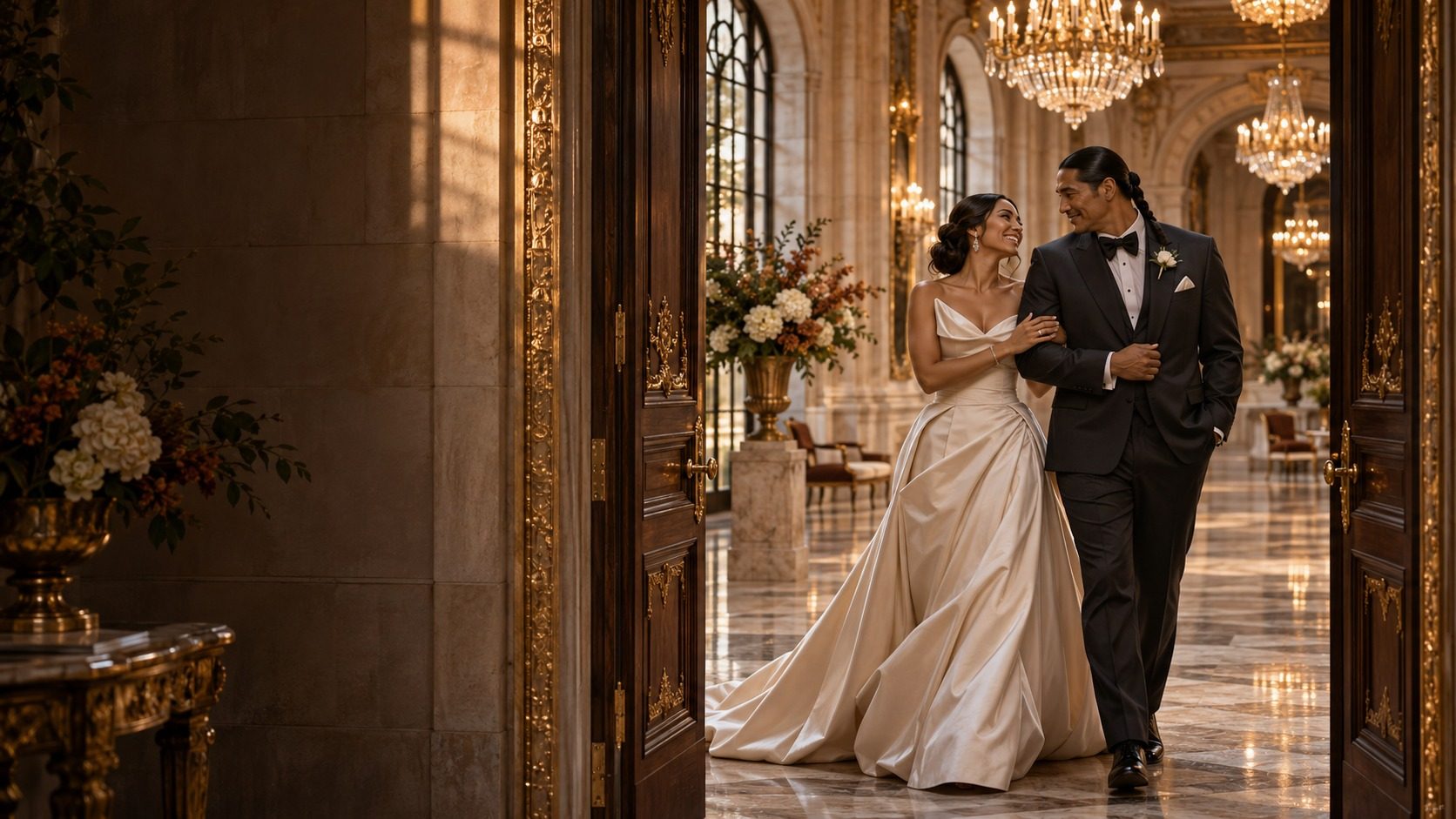
The most useful wedding plan is the one that lets you stop managing it. Here is how to make room for your own experience without leaving the practical details to chance.
Decide what presence means to you
“Enjoy the day” can sound like another instruction to perform. Some people are energized by a full room; others need a quiet interval before walking into it. Presence may mean a long conversation with a grandparent, hearing every word of the ceremony or sitting down to eat beside your partner. Name those moments before building the timeline. Otherwise, a day can become very efficient at delivering things you never particularly wanted.
Write three experiences you hope to have, using verbs rather than visual references. You might want to welcome, listen, dance, pray, laugh or rest. Share those words with the planner and visual team. They explain more about the day you are trying to protect than a folder of images alone. They also help when two good ideas compete for the same thirty minutes.
Give decisions a home before the celebration
An unresolved task has a way of finding the couple at the least convenient time. A vendor cannot locate an entrance, a family member needs directions, or someone wants approval to move a table. These are ordinary questions. They become exhausting when there is no agreed person to answer them.
Create a responsibility map with your planner or designated lead. Name who handles arrivals, family gathering, venue questions and scope changes. Distinguish a person who can solve an operational issue from someone who can authorize additional spending. The instructions should fit on a usable contact sheet. Private payment information and sensitive family context belong in a separate conversation, not in a document forwarded to the entire vendor team.
Leave space that is not a production opportunity
A timeline can become crowded by useful things: an extra portrait location, a gift exchange, a room reveal, a second outfit. Each addition may sound small. Together they can remove the ordinary minutes in which you notice the celebration happening.
Ask what each addition gives you and what it displaces. A longer journey to a portrait location might mean less time with guests. A carefully staged morning may require an earlier start. You can choose either, provided the trade is conscious. Reserve meals, dressing, transport and a private pause with the same seriousness as formal events. They are the conditions that make the rest of the day livable.

Brief the camera team about experience
Tell your photographer how you feel about direction. Some couples enjoy an intentional portrait interval and then want the rest of the day observed quietly. Others welcome more guidance. Neither preference is a deficiency. The important part is that the team understands it before working in front of guests.
Share meaningful people, cultural observances and moments that should remain private. Ask how portraits fit into the proposed timeline and what a shorter fallback would preserve. A useful creative brief gives the photographer a direction and boundaries, while leaving room to respond to real light and relationships. It should not require your wedding to reproduce someone else’s sequence of emotions.
Plan for a graceful change
A live gathering will not behave exactly like its document. Dressing may take longer, a speech may run over, or weather may change the route. Decide in advance which priorities you want protected and which details can be simplified. The first option should not always be to hurry the couple.
Ask the planner to name the decision owner for weather and other major changes. Review a shorter family portrait list and an alternate portrait location with the photographer. These choices do not make the day less ambitious. They make it easier for the team to protect its meaning when conditions shift. The alternative needs a place, a person and a way to communicate it.
Let the day become a memory
When the planning is done, you are allowed to stop checking whether the celebration looks sufficiently important. Notice who is with you. Listen to a familiar voice. Tell the team when you need a pause. An expression does not have to be camera-ready to be part of the story.
The Haus of Grey’s approach begins with that lived experience, then considers how photographs, film and a physical archive can hold it. A first conversation can start with a date, a place and a few things you do not want to miss. Our 33-page couple’s companion gives those priorities and practical decisions a place to meet before the day arrives.