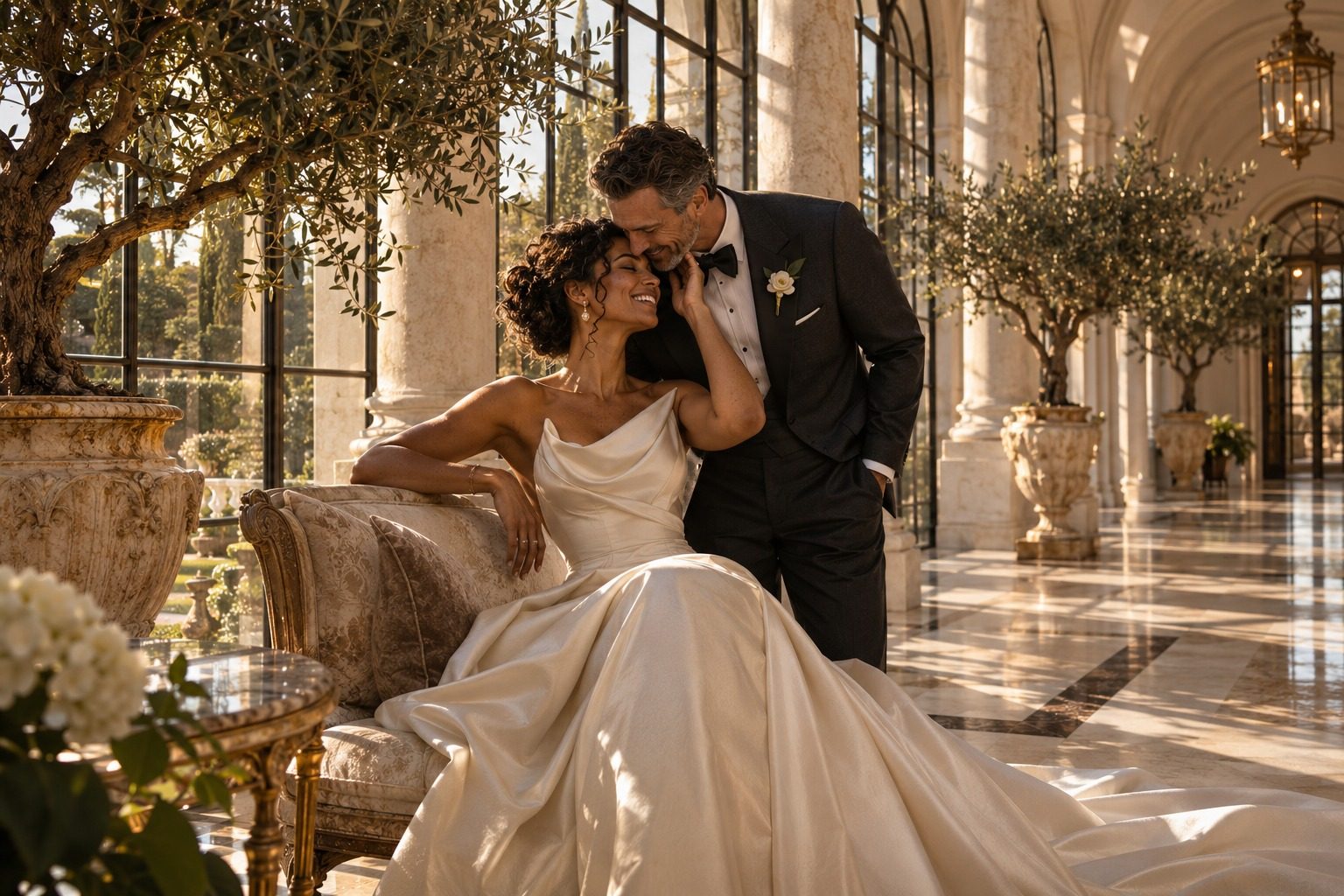
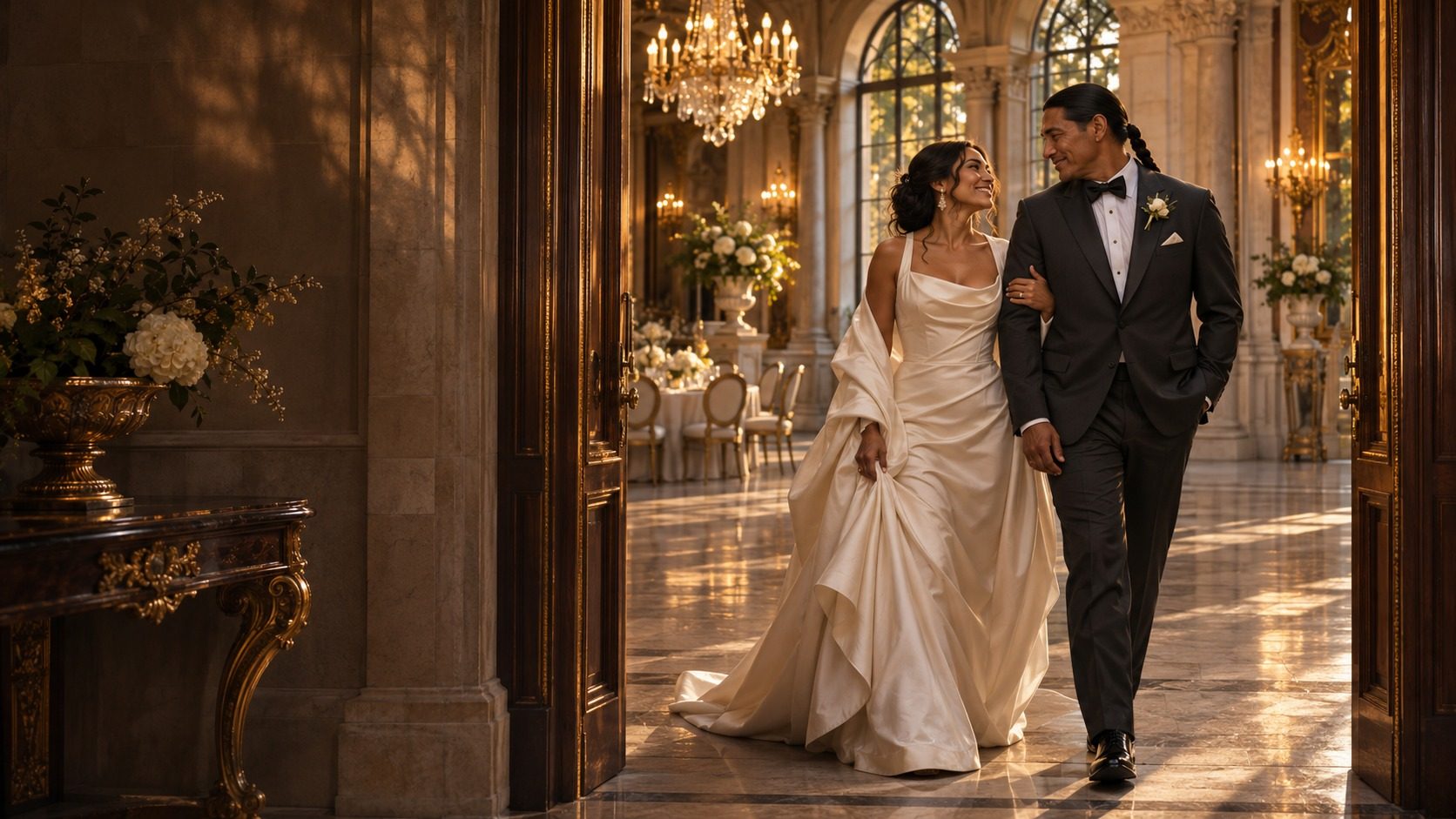
A finished room deserves attention. Plan the documentation window with the people creating it and the guests about to enter it.
Start with the actual ready time
A room is not ready for photographs because the timeline says it should be. Florals, place settings, lighting, service preparation and final venue checks may each have their own dependencies. Ask the responsible leads when the room will be complete and what “complete” means for this event.
The answer helps the photographer choose a realistic plan. It may be possible to make architectural views before final details arrive, then return for a smaller set. It may be better to document some elements during another interval. The important part is that the team is working from the installation’s actual condition rather than asking people to clear a room that is still being prepared.
Decide which images are essential
The couple, planner, venue and design team may each value different aspects of the room. Gather the priorities before the day, then ask the visual lead what can be achieved within the available window. Scale, texture, table relationships and meaningful personal details can all have a place.
Avoid turning a short access period into an expectation of a full commercial shoot. A live wedding commission and a dedicated brand production are different scopes. A concise brief helps the photographer make useful decisions without repeatedly stopping to ask which object matters. If a business needs controlled advertising assets, discuss a separate commission rather than quietly adding that requirement to the couple’s day.
Protect access and the work itself
Keep guest routes, emergency access and essential service areas open. Ask before moving any installation, place setting or personal object. A floral structure may have handling limits that are not visible in a photograph; a borrowed object may need a particular person to move it.
Name who can approve an adjustment and who returns anything temporarily moved. The room’s readiness is a shared responsibility. Photography should not create a safety issue or force another team to rebuild finished work under pressure. A brief conversation with the planner and design lead can protect both the image and the people who made the scene possible.
Coordinate photo, cinema and lighting
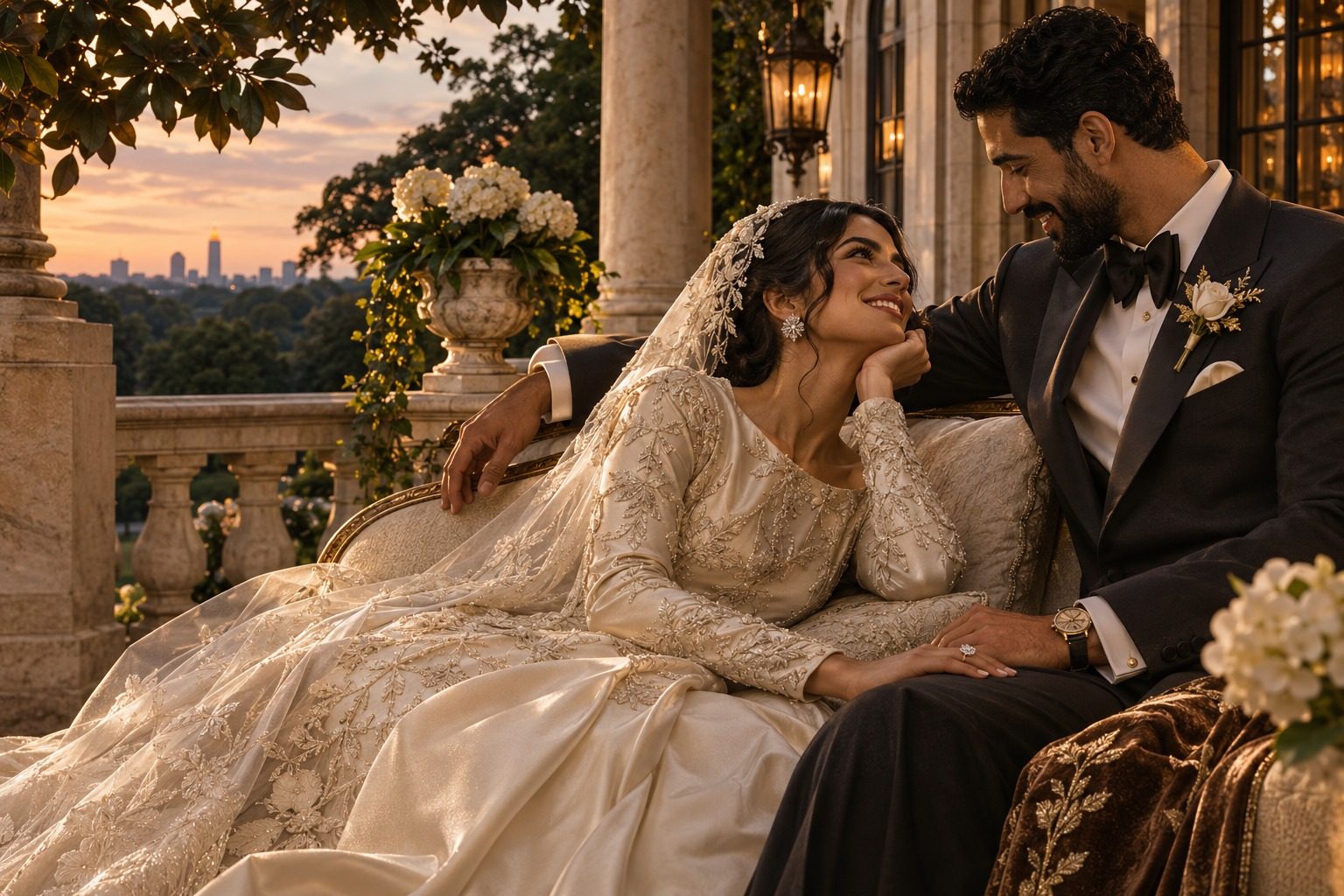
A still photographer and filmmaker may need different kinds of movement and time in the same space. The lighting that will welcome guests may also differ from the setup used during installation. Put those requirements into the production conversation rather than discovering them at the door.
Agree on the sequence and the person who cues guest entry. If a light needs to change, confirm who controls it. If a camera move requires a clear route, make sure it does not conflict with catering or venue checks. These are practical details, but they influence whether the room can be documented calmly without delaying hospitality.
Choose the smaller version in advance
If installation runs late, the solution should not automatically be to keep guests waiting. Ask which views would best preserve the design within a shorter interval. The photographer may make a room view, a table relationship and a few meaningful details, then continue observing the space as it fills with people.
Name the decision owner and communicate the change to the relevant leads. A reduced plan that everyone understands is more useful than several professionals independently defending their preferred sequence. The gathering is still the couple’s experience. Design documentation should support its record rather than become the reason the reception cannot begin.
Plan the image handoff afterward
Confirm which selections can be shared with contributors and under what terms. Record accurate business names and roles. Keep the couple’s publication preferences, the photographer’s licensing and any editorial timing requirements together. An image of a collaborator’s work is valuable, but access does not establish every possible commercial use.
Our venue workbook and vendor companion include briefs for room documentation, credits and image requests. Use those pages with the planner and visual lead before the event. The result should be useful images of the design and a reception in which the people still arrive at the right moment.